
Transforming port security with AI-powered remote container inspections
A major port authority inspected thousands of shipping containers manually — each inspection could take up to half a day and required cargo owners on-site.
The problem
A major port authority faced significant operational challenges in inspecting thousands of shipping containers arriving at its facilities. Traditional inspection processes required coordination with cargo owners, physical attendance, manual verification, and security inspections to identify undeclared, restricted, or suspicious goods.
Each inspection could take up to half a day, creating operational bottlenecks, increasing logistics costs, and delaying cargo movement.
The process was highly dependent on human coordination and physical presence, making it difficult to scale efficiently while maintaining security standards.
Our solution
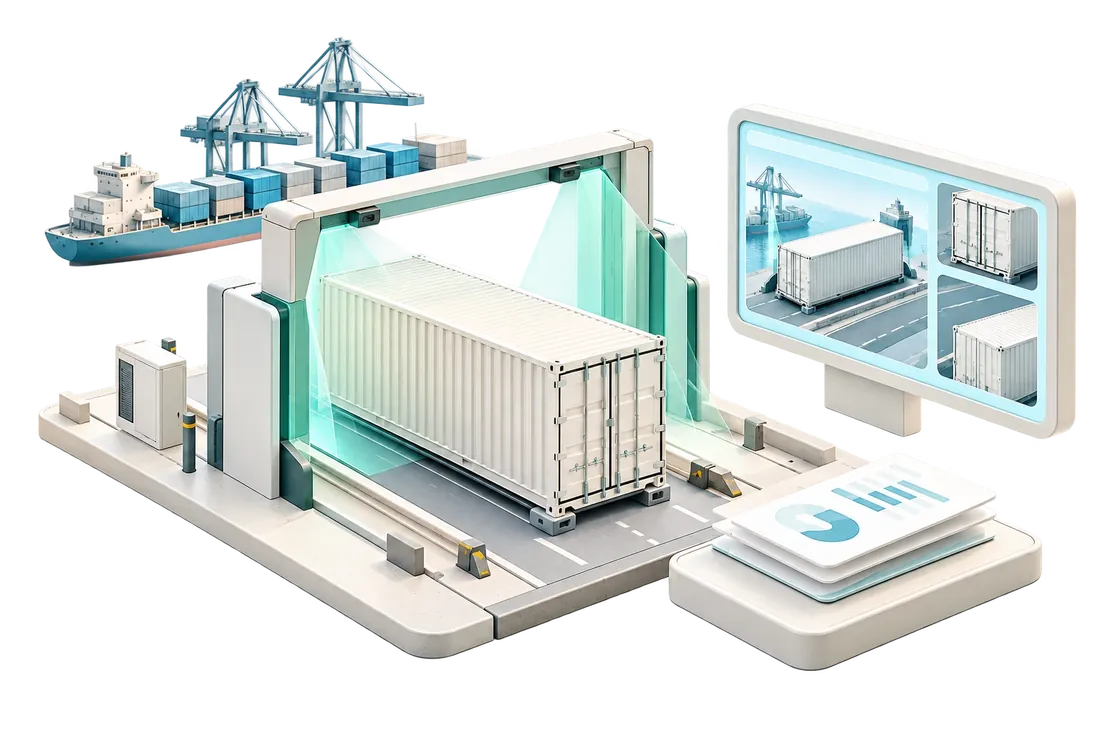
Metacognixion developed an AI-powered Remote Container Inspection Platform integrating computer vision, X-ray scanning, AI-enabled smart glasses, secure identity verification, and automated reporting. The solution enabled authorized stakeholders to participate in inspections remotely while security personnel conducted intelligent, technology-assisted verification on-site.
Remote inspection portal
Secure access for cargo owners and authorized officials, eliminating the need for owners to attend every inspection physically.
Digital identity verification
Verified cargo owner identities before granting access to inspection sessions.
X-ray & computer vision integration
Enabled intelligent cargo screening to identify potentially suspicious items and support security decisions.
AI-enabled smart glasses
Equipped on-site inspectors with wearable technology to examine flagged cargo and compare physical goods against declared shipment information.
Real-time collaboration
Connected remote stakeholders with on-ground inspection teams for live verification and decision-making.
Automated inspection reports
Recorded inspection activities, captured findings, and generated digital reports for documentation and auditability.
The impact
Inspection time reduced to 3–5 minutes
Processes previously taking up to half a day could be completed in minutes, significantly accelerating inspection turnaround.
Smarter security inspections
Combined X-ray screening, AI-assisted identification, and human verification to support more informed inspection decisions.
Reduced operational and logistics costs
Minimized unnecessary physical visits, manual coordination, and cargo waiting times, improving resource utilization.
Improved stakeholder experience
Enabled cargo owners to participate remotely, reducing inconvenience, delays, and administrative overhead.
Digital traceability and accountability
Introduced recorded inspection sessions and automatically generated reports, improving transparency and audit readiness.
Rather than simply digitizing the existing inspection process, we challenged the need for physical presence at every stage. By combining AI, computer vision, wearable technology, remote collaboration, and workflow automation, we redesigned how cargo inspections could be conducted — while keeping authorized security personnel in control of inspection decisions. The result: a faster, more scalable, and security-focused inspection ecosystem that improved operational efficiency without removing essential human oversight.
Facing a process that runs on people's hours?
That's exactly what we redesign.