
Capacity architecture: the business's operating system, not a stack of tools.
Every business runs on people's hours. Capacity architecture is how that stops being the limit.
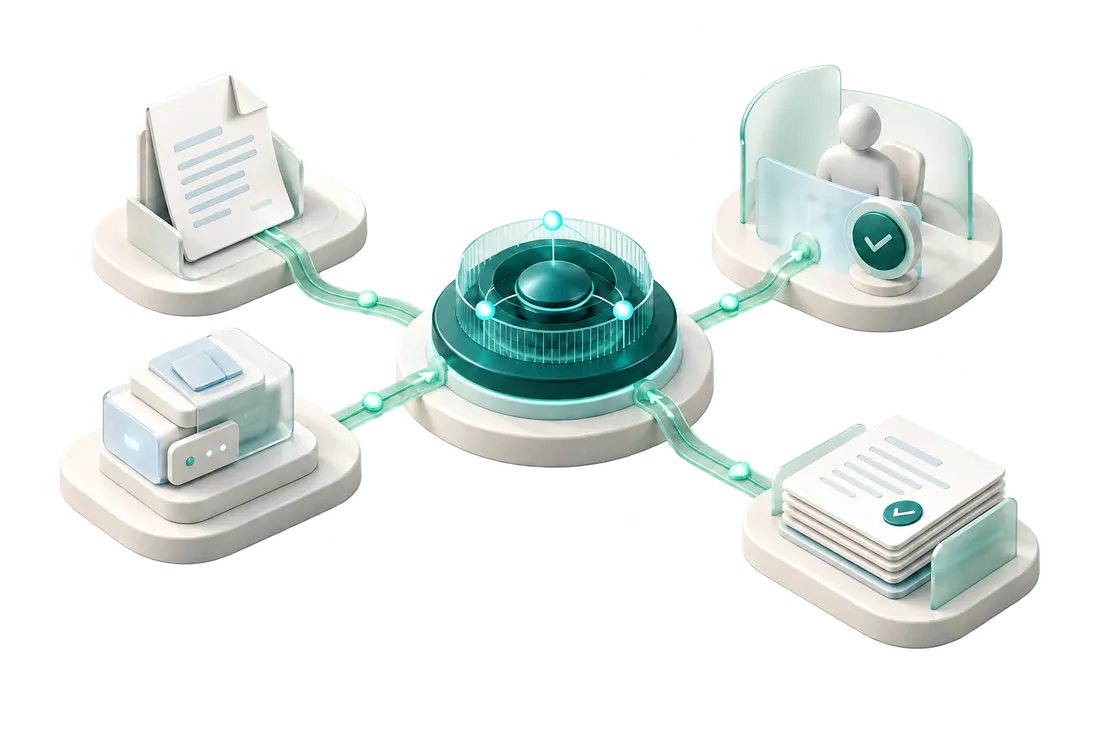
Three kinds of executor. One orchestration.
Sceniq holds availability, takes bookings and bills them (software). A bilingual voice agent like Oraly — currently in development — is designed to answer the phone in English or French, book into that same availability and route exceptions (AI agent). Your team hosts the guests in front of them and handles the unusual cases the system escalates (people). One operation, three kinds of executor — and the owner stops being the bottleneck.
Where sovereignty matters, the models in this system are purpose-built — adapted or developed for your domain and deployed within your environment. See Sovereign AI
Named, documented, defensible.
What is Capacity architecture?
The design of a business's operating system: which work runs on software, which on AI agents, which on people — orchestrated so output stops scaling with headcount.
What is Vertical AI operating system?
A platform that runs one kind of business end to end — calls, bookings, billing, operations — with the industry's data model, workflows and compliance already built in.
Build like a giant. Move like a startup.
Book a 30-minute capacity call. We map where your business depends on people's hours — and what breaks that limit.